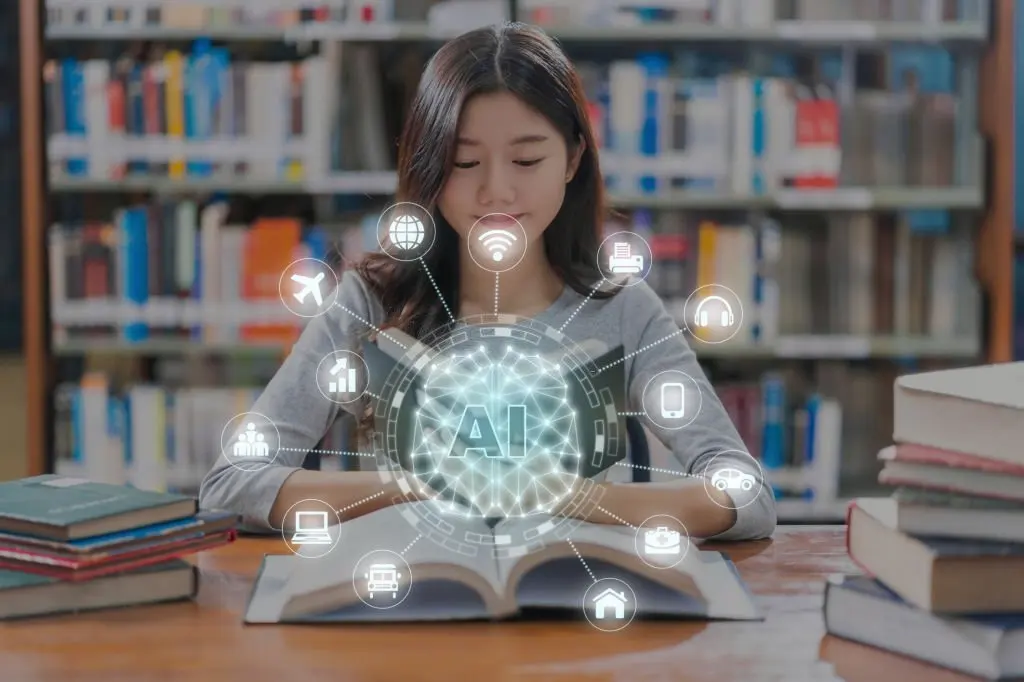
Artificial Intelligence (AI) is having a profound impact on education, transforming the way students learn, teachers teach, and educational institutions operate. Here are some key ways in which AI is being used in education:
- Personalized Learning: AI can create personalized learning experiences for students by analyzing their individual learning styles, strengths, and weaknesses. This enables educators to tailor instruction and resources to meet each student’s unique needs.
- Adaptive Learning: AI-powered adaptive learning platforms adjust the difficulty and pace of lessons in real-time based on a student’s performance. This ensures that students are challenged but not overwhelmed, promoting better learning outcomes.
- Assessment and Grading: AI can automate the grading of assignments, quizzes, and exams, saving teachers time and providing instant feedback to students. It can also detect patterns in student performance to help identify areas where additional support may be needed.
- Chatbots and Virtual Assistants: Educational institutions are using chatbots and virtual assistants to provide students with instant access to information and support services. These AI-driven systems can answer common questions, guide students through enrollment processes, and offer career counseling.
- Language Processing for Writing Assistance: AI-powered tools can help students improve their writing skills by providing grammar and style suggestions. They can also assist in plagiarism detection to ensure academic integrity.
- Early Intervention: AI can identify students who may be at risk of falling behind or dropping out based on their engagement and performance data.
- Language Learning: AI-driven language learning apps and platforms can adapt to individual learners, providing customized lessons and practice exercises to improve language skills.
- Virtual and Augmented Reality (VR/AR): VR and AR technologies, often driven by AI, can create immersive educational experiences. For example, students can explore historical sites or conduct virtual science experiments.
- Educational Content Creation: AI can assist in the creation of educational content, such as generating test questions, creating interactive simulations, and even developing entire courses.
- Data Analytics: AI helps educational institutions analyze vast amounts of data to make informed decisions about curriculum development, resource allocation, and student performance trends.
- Teacher Support: AI can provide teachers with tools and resources to streamline administrative tasks, allowing them to focus more on instruction. It can also offer teaching recommendations and professional development suggestions based on individual teacher performance.
- Accessibility: AI can improve accessibility for students with disabilities by providing text-to-speech, speech-to-text, and other assistive technologies.
- Global Education: AI-powered translation and language learning tools facilitate global education by breaking down language barriers.
- Education Research: Researchers use AI to analyze educational data on a large scale, enabling them to gain insights into teaching and learning methods.