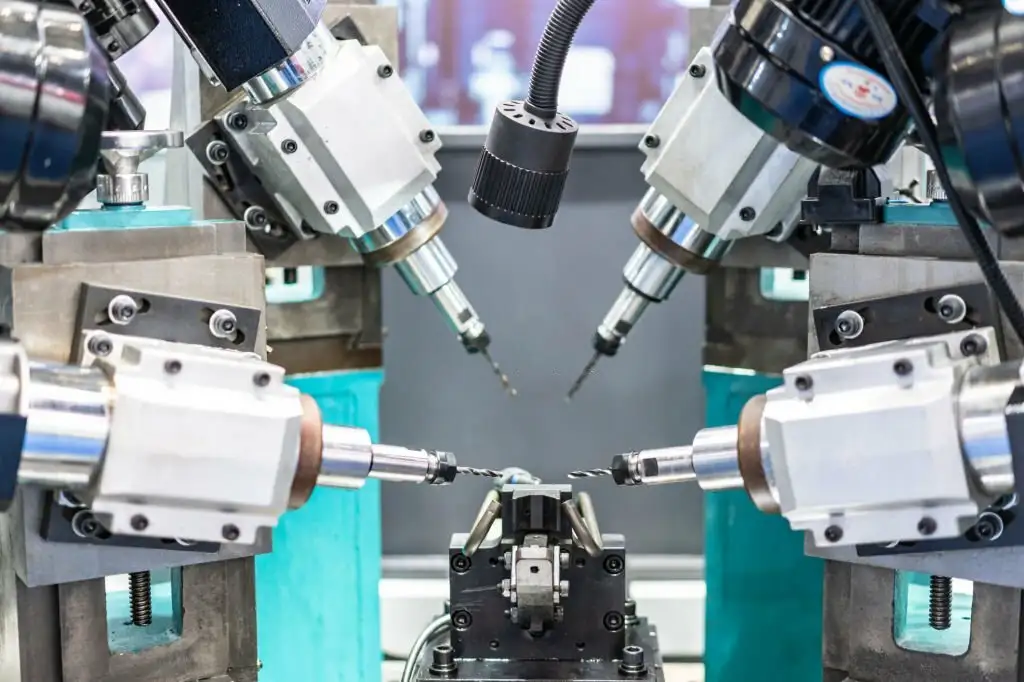
“Dynamics of Machinery” is a branch of mechanical engineering that deals with the study of the motion, forces, and energy associated with the moving parts of machines and mechanical systems. It focuses on analyzing and understanding the behavior of machinery components, including linkages, gears, levers, cams, and more, in order to design and optimize mechanical systems for various applications.
- Kinematics: Kinematics deals with the study of motion without considering the forces that cause it. It includes concepts such as displacement, velocity, acceleration, and angular motion. Understanding the kinematics of machine components is fundamental in the analysis of their behavior.
- Kinetics: Kinetics, in contrast to kinematics, focuses on the forces, torques, and moments that act on machine components and systems. It involves the study of how these forces affect the motion of machinery.
- Force Analysis: In the context of machinery dynamics, force analysis is crucial for determining the forces transmitted through various machine elements, such as linkages, gears, and bearings. This analysis helps ensure the proper design and durability of these components.
- Balancing: Balancing is the process of ensuring that rotating machinery, such as engines and turbines, is free from vibrations and wobbling caused by unbalanced forces. Dynamic balancing techniques are used to achieve this.
- Vibration Analysis: Vibration analysis is a significant aspect of machinery dynamics. Engineers analyze and mitigate vibrations in machinery to ensure smooth operation and prevent damage. This is particularly important in applications where vibrations can lead to fatigue or structural failure.
- Cam Mechanisms: The study of cam mechanisms is essential in the design of machines that require precise intermittent motion. Cams and followers are commonly used in various applications, including engines, manufacturing equipment, and automation systems.
- Gear Dynamics: Gears are crucial components in many mechanical systems. Gear dynamics involves analyzing the behavior of gears under different loads and operating conditions, including meshing, backlash, and tooth profiles.
- Linkage Analysis: Linkages are mechanical systems made up of interconnected bars, rods, or other components. Understanding the kinematics and dynamics of linkages is important for applications like robotics, vehicle suspension systems, and machinery with complex motion requirements.
- Energy and Power Transmission: The study of how energy is transmitted through machinery and how mechanical power is transferred between different components is essential in machinery dynamics.
The ultimate goal of studying the dynamics of machinery is to design and optimize mechanical systems that operate efficiently, reliably, and safely. Engineers in this field use principles of mechanics, mathematics, and computer simulations to analyze and predict the behavior of machine components, helping to improve the performance and longevity of various mechanical systems across a wide range of industries, including automotive, aerospace, manufacturing, and robotics.