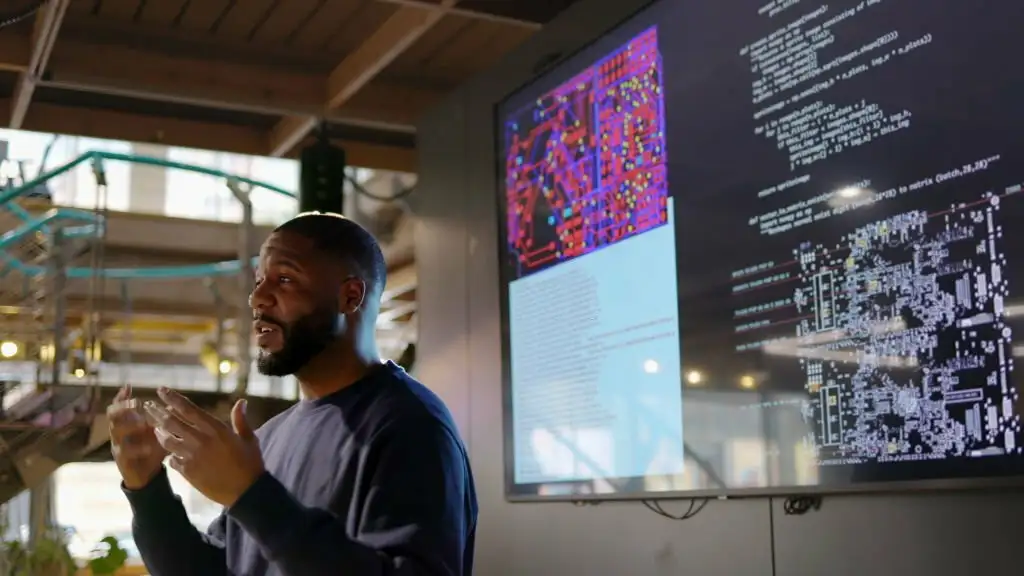
Information coding theory, often referred to as coding theory, is a branch of information theory that deals with the representation, compression, transmission, and error correction of information. It is a fundamental concept in the field of computer science, telecommunications, and digital communication. Coding theory addresses how to efficiently and reliably transmit data in the presence of noise or errors in communication channels. Here are some key concepts related to information coding theory:
- Information Theory: Information coding theory was initially developed by Claude Shannon in the mid-20th century as part of information theory. Shannon’s work laid the foundation for understanding the fundamental limits of data compression and reliable data transmission in communication systems.
- Data Encoding: Coding theory involves the conversion of data from one form (source data) to another (encoded data) to make it suitable for transmission. This encoding can include methods like Huffman coding, run-length encoding, or more complex techniques like error-correcting codes.
- Redundancy: One of the key ideas in coding theory is the introduction of redundancy into data. By adding redundant information to the original data, it becomes possible to detect and correct errors that occur during transmission.
- Error Correction Codes: Error correction codes are a vital part of coding theory. These codes are used to detect and correct errors in the received data. Popular error correction codes include Reed-Solomon codes and Hamming codes.
- Error Detection: Error-detecting codes are used to identify the presence of errors in the transmitted data, without necessarily correcting them. This is particularly useful in cases where retransmission of the data is not possible or desirable.
- Lossless Compression: Coding theory plays a role in lossless data compression, which reduces the size of data for efficient storage and transmission without losing any information. Techniques like Run-Length Encoding and Lempel-Ziv-Welch (LZW) compression are used for this purpose.
- Lossy Compression: While information coding theory primarily deals with lossless compression, it also has implications for lossy compression techniques used in image and audio compression (e.g., JPEG and MP3). These methods sacrifice some data precision to achieve higher compression ratios.
- Shannon’s Theorems: Shannon’s theorems in information theory, such as the Shannon-Hartley theorem, provide fundamental limits on the capacity of communication channels, considering factors like bandwidth, signal-to-noise ratio, and data rate.
- Applications: Coding theory is widely applied in various fields, including data storage (e.g., CDs, DVDs, and hard drives), wireless and wired communication systems, satellite communications, and data transmission over the internet.
- Quantum Coding Theory: In the field of quantum information theory, there is also quantum coding theory, which deals with the transmission and storage of quantum information. Quantum error-correcting codes are used to protect quantum states from the effects of quantum noise and decoherence.
Coding theory plays a crucial role in ensuring reliable and efficient data communication, which is fundamental to the functioning of modern information systems. Whether in the context of correcting errors in data transmission or reducing the size of data for efficient storage, it has far-reaching applications in various technologies and industries.