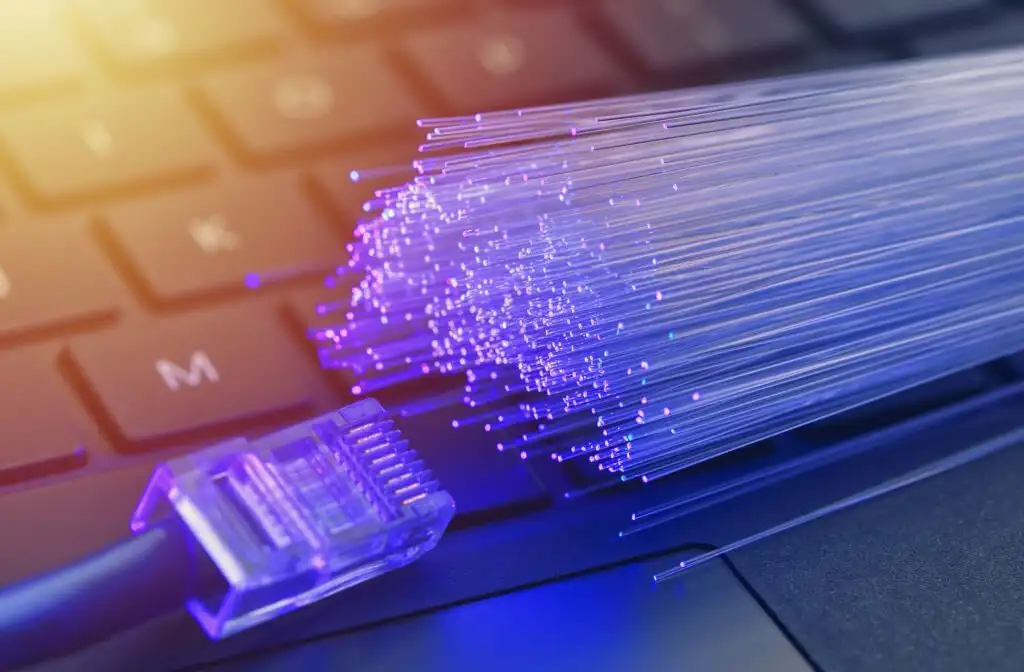
Optical fiber communication is a method of transmitting information using light pulses through optical fibers. It is a key technology for long-distance and high-speed data transmission in various applications, including telecommunications, the internet, cable television, and more. Here are some key aspects of optical fiber communication:
- Basics of Optical Fibers:
- Optical fibers are thin, flexible, and transparent strands typically made of glass or plastic. They have a core, where the light travels, surrounded by a cladding layer to facilitate total internal reflection.
- How it Works:
- In optical fiber communication, data is transmitted in the form of light pulses. A light source (usually a laser or light-emitting diode) generates light, which is then modulated to encode digital information.
- The modulated light is injected into one end of the optical fiber, and it travels through the core by repeatedly reflecting off the core-cladding interface due to total internal reflection.
- Advantages of Optical Fiber Communication:
- High Bandwidth: Optical fibers offer a much higher data transmission capacity compared to traditional copper cables, making them suitable for high-speed data communication.
- Long-Distance Transmission: Light signals can travel long distances without significant signal degradation, which is especially important for long-haul telecommunications.
- Immunity to Electromagnetic Interference: Optical fibers are immune to electromagnetic interference, making them more reliable in various environments.
- Security: It is difficult to tap into optical fibers without detection, providing a high level of data security.
- Components of Optical Fiber Communication:
- Transmitters: These are the devices that convert electrical signals into optical signals for transmission. Lasers and LEDs are commonly used transmitters.
- Optical Fiber Cables: The actual fiber optic cables that carry the light signals.
- Receivers: These devices receive the optical signals and convert them back into electrical signals for processing.
- Optical Amplifiers: Devices used to boost the strength of optical signals for long-distance transmission.
- Multiplexers and Demultiplexers: These devices combine multiple data channels into a single fiber (multiplexing) and separate them at the receiving end (demultiplexing).
- Applications:
- Telecommunications: Optical fiber networks form the backbone of modern telecommunications, enabling the internet, telephone, and video services.
- Data Centers: Optical fibers are used to interconnect data center equipment for high-speed data transmission.
- Cable TV: Fiber optics are used to deliver high-definition television and internet services to homes.
- Medical Imaging: Optical fibers are used in endoscopy and medical imaging equipment.
- Industrial and Military Applications: Optical fiber communication is used in various industrial and military applications, including undersea cable systems and secure communications.
Optical fiber communication has revolutionized the way data is transmitted, enabling faster and more reliable connections for both personal and commercial use. It continues to play a crucial role in the development of modern communication systems.